This site is currently under construction and will be added to as the content becomes available.
Honesty stalls appear quietly across the rural landscape — tucked
into village lanes, scattered through farmland, and increasingly found along well‑worn walking routes. Some are no more than a crate with a few offerings; others are carefully arranged, from small branded cake stands to fully organised farm shops. However different their forms, they all rest on the same enduring principle: an unspoken agreement between people.As everyday life shifts, these stalls shift with it. The familiar coin‑filled jar now sits alongside digital payment options — subtle adaptations that reflect a changing world without disturbing the core idea. Despite an age shaped by tills, surveillance, and contactless transactions, honesty stalls remain disarmingly straightforward. Each one carries a quiet narrative: gardens shaped by the seasons, family routines, and an everyday integrity that asks for little more than good faith in return.This project documents that tradition — simple, local, and deeply rooted — and considers what happens when it is also introduced to city life. From long‑held rural practices to a mobile honesty stall in London, each journey reveals how trust behaves in different environments. What does honesty look like when placed in the paths of different people?
An Artist’s Perspective
The project began after a visit to Guernsey, where the tradition remains especially strong. Stalls there are practical and improvised — a board becomes a shelf, a jar becomes a till, a loop of string becomes a latch. Their appearance isn’t curated; it grows out of need, weather, and personality.Placed at the edges of fields, lanes, and driveways, they slowly take on the marks of time. Paint softens, wood warps, prices are rubbed away and rewritten. Each stall adapts with the seasons and the rhythm of daily life.What makes them distinctive is this blend of trust and individuality. Every stall is a small, unspoken portrait of its maker — inventive, hopeful, and matter‑of‑fact.

A History of Honesty Stalls In The UK
From what has been discovered through this project is that honesty stalls once stretched across the whole of the UK, from rural communities in Cornwall to the far reaches of the Shetland Islands. What we now see as a charming, almost nostalgic custom was once entirely ordinary — part of daily life, accepted without question.That very ordinariness may explain the lack of early visual records. Before the 1970s, these stalls were so commonplace they were rarely photographed. They weren’t seen as noteworthy — simply as part of how things were done.It’s even possible that, in their earliest form, no payment was expected at all. Surplus produce may have been shared freely among neighbours, passed along as a quiet act of mutual support. At some point, the now-familiar payment jar or honesty box emerged, though exactly when this shift occurred remains unclear — leaving only fragments of a tradition built on trust.
The Future
Rising unemployment and the shift toward working from home are changing how people connect with work, income, and local life. As traditional jobs become less stable and more people look for flexible or independent ways to earn, there’s space for simpler, more direct forms of exchange between people in the same area. In that context, a concept like an “honesty stall” could evolve into something much bigger than a physical point — it could become a way for creators, growers, and local makers to advertise what they offer straight to their community without layers of middlemen. Technology could take this simple idea further by turning it into a lightweight local network where people post what they make, grow, or need, and others respond based on trust and proximity rather than algorithms or corporate platforms. Instead of distant marketplaces, you get a more human-scale system — part digital, part physical — where local exchange becomes visible again and everyday work is reconnected to real communities.
UK Law and Honesty Stalls

For new entrants, it can be reassuring to know that the format is already understood, already commonplace, and already quietly functioning across the UK. The trust‑based principle is the core; the practicalities are just the scaffolding around it.
1. Honesty stalls are legal — but they’re not a legal loophole.There is no law prohibiting an unmanned stall or an honesty box. The model is perfectly lawful. What matters is what you’re selling and whether that activity triggers other regulatory duties.
2. Primary produce (eggs, fruit, veg) is the simplest category.If you’re selling unprocessed primary products that you produced yourself, the rules are minimal:You can sell small quantities directly to the final consumer without formal registration.This exemption does not apply once you process the food (jam, cakes, chutney, etc.).This is why rural egg stalls proliferate — they sit in the lowest‑friction regulatory zone.
3. Processed foods trigger food business registration.Once you sell anything processed (jam, baked goods, dog biscuits, etc.), you are considered a food business and must:Register with your local council (free, simple, but mandatory).Follow basic food hygiene requirements.The honesty box format doesn’t exempt you — the law cares about the food, not the payment method.
4. Street trading rules only apply if you’re on public land.If the stall is on your own land, you generally do not need a street trading licence.If you place a stall on public pavement, verge, or highway, you may need:A street trading licence.
5. Income must be declared.Even if payment is voluntary, any money received is taxable income.
6. Theft and enforcement are murky.If someone takes goods without paying:If there is clear pricing, it resembles theft from an unmanned shop.If there is no price list, the arrangement can be interpreted as a voluntary donation model, making enforcement difficult.
7. The honesty box itself is not regulated.There is no law governing:Whether you can use an honesty boxHow it must be labelledWhether it must be securedThe law only engages when the activity (food sale, street trading, business income) crosses a regulatory threshold.
Author Lynne D Noble
"The high trust society is what I grew up in and so living in this very corrupt society is totally alien. Granted I knew my cousins, second and third cousins to much of life was spent within a huge extended family but whenever I see an honesty box it does give me a feeling of belonging and familiarity and nostalgia."
Up load your photos and what your stall means to you here.
Or email: [email protected]
You can help spread the word through your social media accounts.
Email: [email protected]
OR
18th March 2026
Honesty Stall Blog
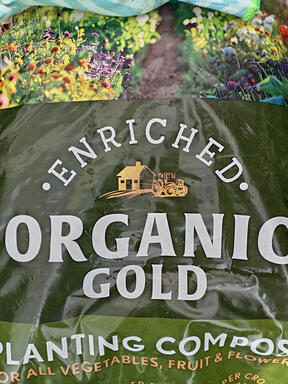
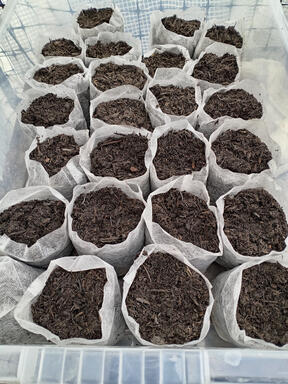
Today the cloth pots were filled with rich organic soil, ready to nurture the first seeds of the London nomadic Honesty Stall.These small beginnings mark the start of something bigger. Over the coming weeks, these pots will be planted with a mix of flowers and vegetables, each one grown with the intention of being offered for sale via the Nomadic Honesty Stall.In time, these seedlings will become the very first produce for the stall — a small but meaningful step towards bringing the tradition of honesty-based trading into the heart of the city.From soil to seed, and seed to stall, this is where the journey begins.
March 26th 2026
Planting and germinating the first seedlings for sale
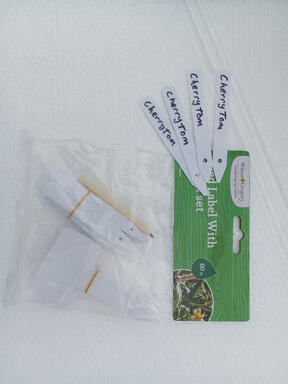
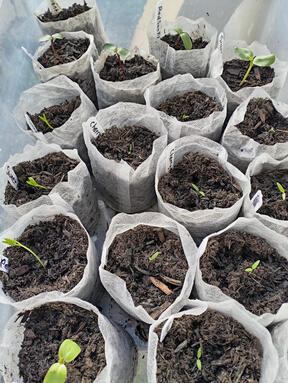
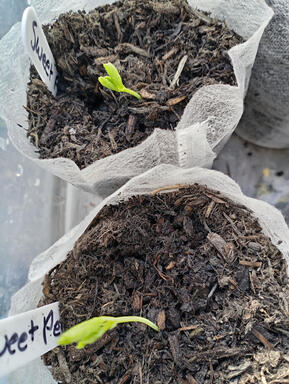
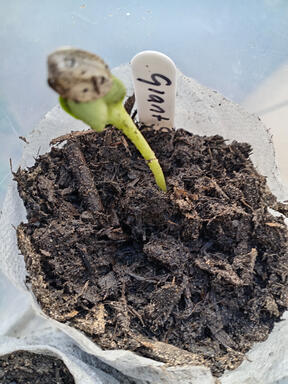
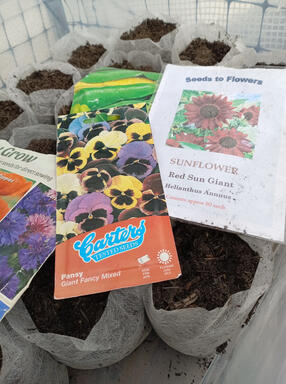
The first seedlings are bursting through — small, determined, and full of promise.Sweet Peas are stretching upwards, delicate but eager. Cherry tomatoes are quietly getting established, preparing for the work ahead. And then there’s the majestic Giant Sunflower, already hinting at the height and presence it will one day bring.It’s early days, but this is where it all begins — the first signs of life for London’s nomadic Honesty Stall. From these tiny green shoots will come the very first offerings, grown with care and shared in trust.A quiet start, but an important one
27th March 2026
Buying the essentials
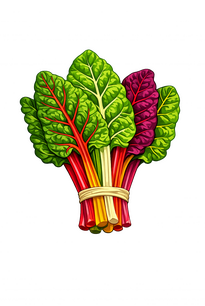
A mobile cart and padlock have now been ordered. In around two weeks, London’s Honesty Stall will be ready to move through the city — a small, portable test of trust in public space. The laminator has also arrived, ready to produce the first signs for the stall.
4th April 2026
The Birth of the Honesty Stall
A couple of boxes arrived this week — nothing dramatic, just the kind of ordinary delivery that quietly marks a beginning. Inside: a lock, some zip ties, a few posters. Enough to turn an idea into a structure.The seedlings are coming along too, steady and unhurried. Their growth mirrors the project itself: small, deliberate, and grounded in everyday rhythm. With these pieces in place, the first public meeting is now within reach — a chance to test the stall in real space, to see how people move around it, how they respond, how trust behaves when it’s given a physical form.
11th April 2026
The moblie stall taking shape
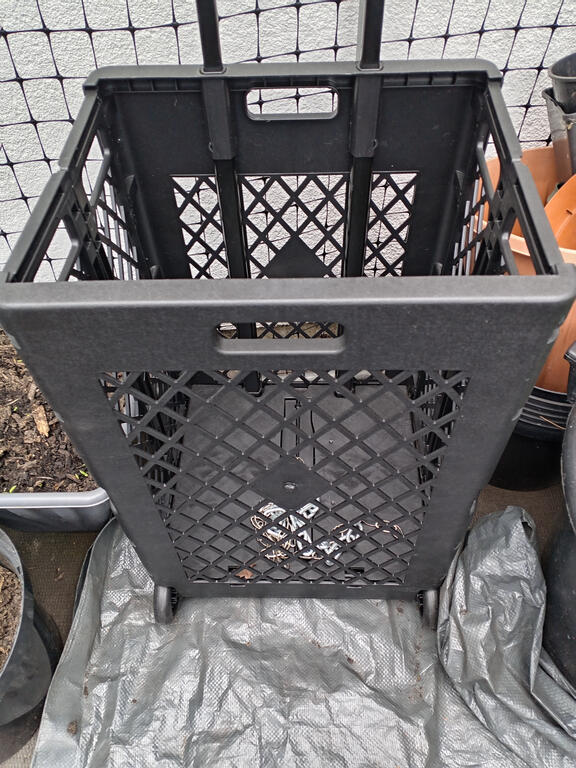
Something simple is taking shape.A humble cart. A handful of plants. No staff, no pressure — just trust.Day by day, the changes have been easy to miss. But looking back at earlier photos, the progress is clear. What started small has quietly grown into something ready to meet the world.On Tuesday 14th April, the honesty stall makes its first appearance in London.No prices shouted. No one watching. Just a simple idea: take what you like, leave what you feel is fair.Will people pass by without a glance? Will curiosity win? Will trust be returned?We’ll find out soon enough.Sometimes the smallest things ask the biggest questions.
14th April 2026
Nomadic Honesty Stalls – First Venture in London
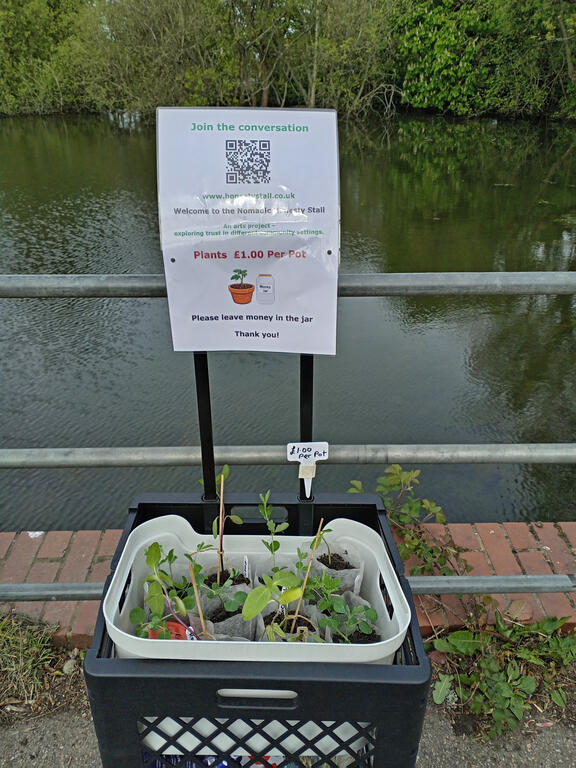
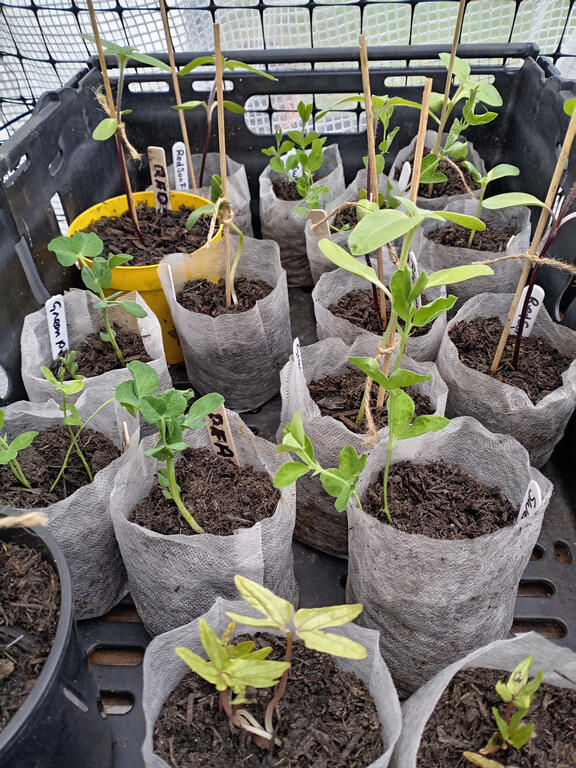
The plants have developed well in the polytunnel, the cart is ready, and the sign is made. The Nomadic Honesty stall has now made its first venture out in London.There were 10 plants on display, a money jar, and a QR code inviting people to join a discussion about the project. The idea was simple: an honesty-based, unattended stall in a public space.Location 1: Park EntranceThe first location was a local park entrance. The stall was left unattended for two hours.When I returned, all 10 plants were still there. No sales, no money taken, and no QR code interactions.Location 2: Local SchoolThe stall was then moved to a second location outside a local school. Again, it was left for two hours.The result was the same. All 10 plants remained untouched. No payments, no interaction, and no engagement with the QR code.ObservationsA few patterns are becoming clear.Cash use appears to be limited, especially loose change. That alone reduces spontaneous purchasing in a traditional honesty-box setup.More significant, however, is the issue of trust and interpretation. An unattended stall in London does not appear to register as a normal or familiar transaction format. Many people likely didn’t know what they were looking at, or didn’t process it quickly enough to engage before walking on.The QR code element, intended to open a conversation and gather feedback, received no visible engagement. That suggests either low trust in scanning unknown codes in public spaces, or simply that the stall itself didn’t create enough clarity or confidence to prompt further interaction.Key takeawayTrust is the central barrier. Not interest in plants, and not necessarily price. The format relies on a level of public comfort with unattended exchange that does not seem to exist in this context.ConclusionThe good news is that nothing was taken without payment. The setup was respected both times.However, the experiment suggests that this format does not currently work in this environment. The combination of unfamiliarity, low cash use, and low trust in unattended transactions creates too many barriers for meaningful engagement.The next step is to reconsider how the idea is introduced — or whether a visible human presence is required to bridge that trust gap.
21st April 2026
I tried a small social experiment this week without really meaning to.
I set up an honesty stall outside my front garden. Just a few trays of seedlings, a simple sign, and a tin for coins. No seller, no supervision, no awkward small talk — just trust. Take what you want, leave what you think is fair.My next-door neighbour got it straight away. Smiled, called it “cute,” picked out a couple of plants, and dropped some coins in the tin like it was the most natural thing in the world.And then… nothing.Not a single other person touched it.What’s interesting is that nothing was stolen. Nothing was damaged. People clearly noticed it — I saw glances, slowed steps, that moment of curiosity. But they didn’t engage. It was like the whole idea just didn’t quite land.It made me realise how much we rely on structure and permission. We’re used to transactions being supervised, priced, explained. Take away the seller and suddenly people hesitate. Is this really for sale? Am I allowed? What if I get it wrong?Trust, it turns out, isn’t confusing — but the absence of rules is.The honesty stall wasn’t rejected. It just didn’t register.Maybe we’ve become so used to systems that we struggle when something simple appears. No barcode, no checkout, no human gatekeeper — just a quiet invitation to do the right thing.Or maybe people just need clearer signs.Either way, it says something about how we think. Not cynical, not dishonest — just unsure when the script disappears.I’ll probably try it again. But next time, I might make the “rules” a bit louder than the trust.
2nd May 2026
Cake Cupboard Licence
When Simple Things Get ComplicatedI saw a short clip today from Daniel's Journey that made me shake my head a little.It was about local cake stalls being asked to pay hundreds of pounds a year for a licence. The comment about “officials hiding in bushes” keeping an eye on things was clearly said with humour… but you can see where the feeling comes from.Because on the surface, cake stalls are about as harmless as it gets.A few homemade bakes. A table. A bit of trust. Sometimes raising money, sometimes just bringing a bit of life to a street or community.It’s not exactly high risk.And yet, like so many simple things, it seems to be getting more complicated.Now, I understand there are reasons for rules. Food safety matters. Public spaces need some structure. Most people would agree with that.But there’s also something else that matters — and that’s common sense.When small, honest, community-led things start to feel weighed down by cost and paperwork, you do wonder if the balance is quite right.Especially when those things rely on trust.That’s really what honesty stalls — and little cake tables — are built on. No one standing over you. No pressure. Just a quiet understanding that people will do the right thing.And in my experience, most people do.That’s the part I always come back to.Not the rules. Not the politics. Just the idea that, given the chance, people are still capable of being fair, decent, and honest — without needing someone “watching from the bushes.”Maybe that’s a bit old-fashioned.But I still think it’s worth holding onto.
13TH MAY 2026
UPDATE
Bassetlaw District Council recently attempted to introduce a “cake cupboard” street‑trading licence, demanding more than £1,000 in fees from small home bakers running honesty‑style cake sheds. The move caused national backlash, with many pointing out that these tiny rural cupboards operate on trust, not commercial scale. After the criticism, the council paused all enforcement and announced a full review of the policy. For now, cake cupboards can continue trading without a licence while the rules are reconsidered.
15th May 2026
Honesty Stalls as a Social Media Aesthetic
How global attention reshapes a local trust systemHonesty stalls were once simple, local exchanges: surplus produce, a tin for coins, and a shared understanding of trust. They worked because everyone knew the norms, and everyone felt accountable.Social media changes that.
A stall becomes a photograph, a rural aesthetic, a moment to share rather than a system to participate in. Outsiders inherit the image of trust, not the responsibility that sustains it.This isn’t malicious — it’s cultural.
Visibility brings admiration, but it also brings people who don’t share the local context. The stall becomes a backdrop, not a community mechanism. Footfall increases, but accountability doesn’t.What gets lost isn’t the money — honesty stalls never made much.
What gets lost is local intimacy, the quiet understanding that “we look after this together”.Some stalls survive because the community around them is strong enough to hold the trust loop in place. Others fade as the meaning shifts from function to spectacle.Honesty stalls are more than rustic charm.
They’re small trust technologies — fragile, human, and deeply rooted in place. When they become global content, they change. And noticing that change matters.
19th May 2026
Channel Islands
Most of my time was spent wandering the rural lanes, finding honesty stalls tucked into corners, hedges, and gateways. These small, trust‑based systems are still alive in the islands in a way that feels rare now — unpolished, uncurated, and genuinely part of daily life.All of the work from this trip is now live at www.hedgeveg.co.uk — a growing record of honesty stalls, rural culture, and the quiet infrastructure that holds these communities together.If you’re interested in how trust survives in small places, or how local practices shift under modern visibility, this new set of images captures that tension clearly.
© Honesty Stall 2026. All rights reserved.